Index Funds/Exchange Traded Fund

Index Funds and Exchange Traded Funds (ETFs) are passive investment options that aim to replicate the performance of a specific market index such as the NIFTY 50 or SENSEX.

Instead of actively selecting stocks, these funds mirror the index composition and weightage. The objective is to generate returns similar to the benchmark index, subject to tracking error.

  • ETF – Traded on stock exchanges like shares.
  • Index Fund – Bought and redeemed directly from the AMC at NAV.

low-price
Low Expense Ratio – Cheaper than actively managed funds.
web-stocks-trading
Passive Strategy – No fund manager bias.
technical-analysis
High Transparency – Portfolio mirrors the index.
Stocks
No Stock Selection Risk – Eliminates fund manager underperformance risk.

STCG

If Equity Allocation is ≥ 65% Holding Period ≤ 12 months, 20% Tax on Gain. Otherwise as per Income Tax slap

LTCG

If Equity Allocation is ≥ 65% Holding Period > 12 months, 12.5% Tax on Gain. Otherwise as per Income Tax slap

Dividends Tax

As Per Income tax slab rates, TDS of 10% may be deducted by the fund house if dividend income exceeds ₹5,000 in a financial year.

Exemption Limit

If Equity Allocation is ≥ 65%. 1.25 Lakh on LTCG in financial year

Indexation

No Indexation

SVG Icon

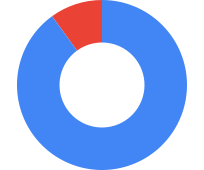
Securities of a particular index
90%
Other
10%
Fund allocation depends on Index and ETF scheme
Nill
Some Index Funds schemes might charge an exit load of 0.1% – 0.25% if units are redeemed within week. However, the exact structure may vary based on the specific scheme.
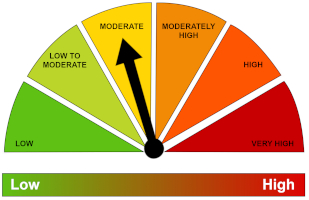
Riskometer Moderate
Depends on Index Fund and ETF scheme type. Above Riskometer is just for visual representation.

Mutual Fund Investments are subject to market risks, read all scheme related documents carefully before investing. Past performance is not indicative of future performance.